
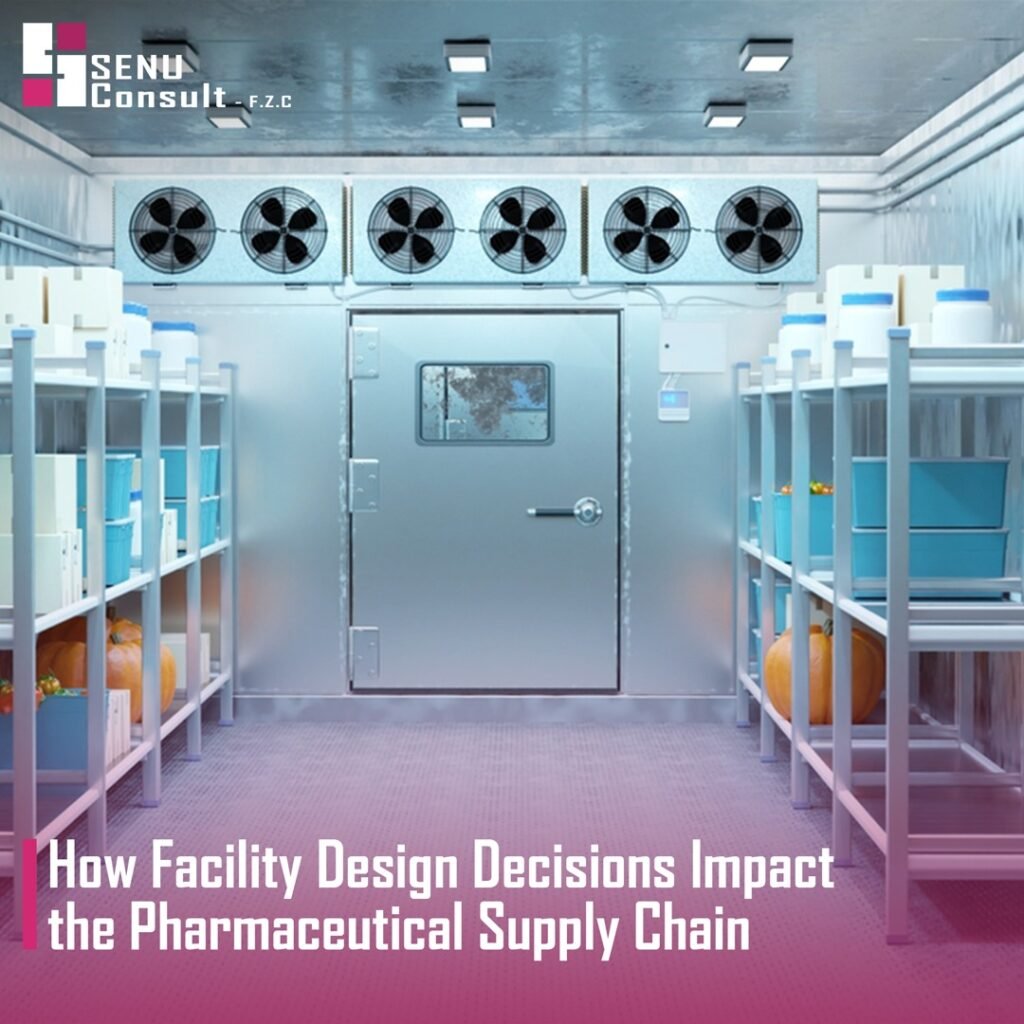
pharmaceutical facility design
How Facility Design Decisions Impact the Pharmaceutical Supply Chain
pharmaceutical facility design
Introduction
In pharmaceutical manufacturing, the supply chain is often discussed in terms of sourcing, logistics, and inventory management. However, one critical element is frequently underestimated. That element is the manufacturing facility itself.
Facility design decisions directly influence how materials, products, information, and people move through the supply chain. As a result, design choices affect efficiency, compliance, and operational continuity. When companies make these decisions without a holistic manufacturing perspective, supply chain inefficiencies and compliance risks quickly appear.
For pharmaceutical manufacturers, designing a facility that supports a resilient and compliant supply chain is therefore a strategic priority, not a technical afterthought.
The Manufacturing Facility as a Supply Chain Node
pharmaceutical facility design
A pharmaceutical manufacturing facility does not operate in isolation. Instead, it functions as a central node within a regulated supply chain. Material receipt, quarantine, sampling, production, packaging, storage, and dispatch all take place within the facility.
Because of this, facility layout and zoning play a decisive role in daily operations. Poor flow design increases handling, creates congestion, and extends lead times. In contrast, facilities designed with supply chain logic enable predictable and controlled operations. These facilities also scale more easily as demand grows.
Material and Personnel Flows: The Basis of Control
One of the most important ways facility design impacts the pharmaceutical supply chain is through material and personnel flows. Clear segregation between raw materials, intermediates, finished products, and waste streams supports both GMP compliance and operational efficiency.
Well-designed facilities reduce unnecessary movement and limit manual handling. As a result, they support FIFO principles and improve batch traceability. These improvements directly enhance inventory accuracy and throughput, which are core supply chain performance indicators.
Storage, Warehousing, and Capacity Planning
Storage and warehousing areas play a critical role in supply chain resilience. Yet, many projects treat them as secondary spaces. Facility design determines storage capacity, environmental controls, and accessibility. Therefore, these decisions directly affect stock availability and production continuity.
When storage areas are insufficient, companies rely more on material transfers or external warehouses. This increases handling risks and operational costs. By contrast, well-planned storage areas aligned with production demand strengthen supply chain reliability and reduce long-term expenses.
Utilities and Infrastructure as Supply Chain Enablers
Utilities such as HVAC, purified water, compressed air, and power systems enable pharmaceutical manufacturing. They do more than support production. They protect product quality and delivery commitments.
When utility capacity is limited, production stops and delivery schedules suffer. For this reason, facility development teams must align utility planning with production needs and future expansion. This approach prevents infrastructure from becoming a supply chain constraint.
Designing for Scalability and Change
Pharmaceutical supply chains constantly evolve. Market demand changes, product portfolios expand, and regulations develop. Facilities designed with flexibility allow manufacturers to adapt without disruption.
Modular layouts, space for future equipment, and adaptable flows support smooth expansion. Consequently, companies can introduce new products, increase capacity, and manage technology transfers more effectively.
Integrating Facility Design and Supply Chain Strategy
Treating facility development as a supply chain initiative delivers long-term value. When companies integrate regulatory, manufacturing, and supply chain requirements early, they avoid costly redesigns and delays.
At Senu Consult, facility development services focus on aligning design decisions with compliance and supply chain performance from the earliest project stages.
🔗 https://senuconsult.com/
This integrated approach helps pharmaceutical manufacturers build facilities that support operational excellence and business continuity.
Conclusion
Facility design decisions have a lasting impact on pharmaceutical supply chain performance. By viewing the manufacturing facility as an integrated supply chain asset, companies improve efficiency, strengthen compliance, and enhance resilience.
A facility designed with supply chain logic from day one becomes a strategic enabler of manufacturing excellence and sustainable growth.
Call to Action
Planning a new pharmaceutical facility or upgrading an existing site?
Speak with the Senu Consult facility development experts to design a manufacturing site that strengthens your supply chain from day one.
🔗 https://senuconsult.com/