
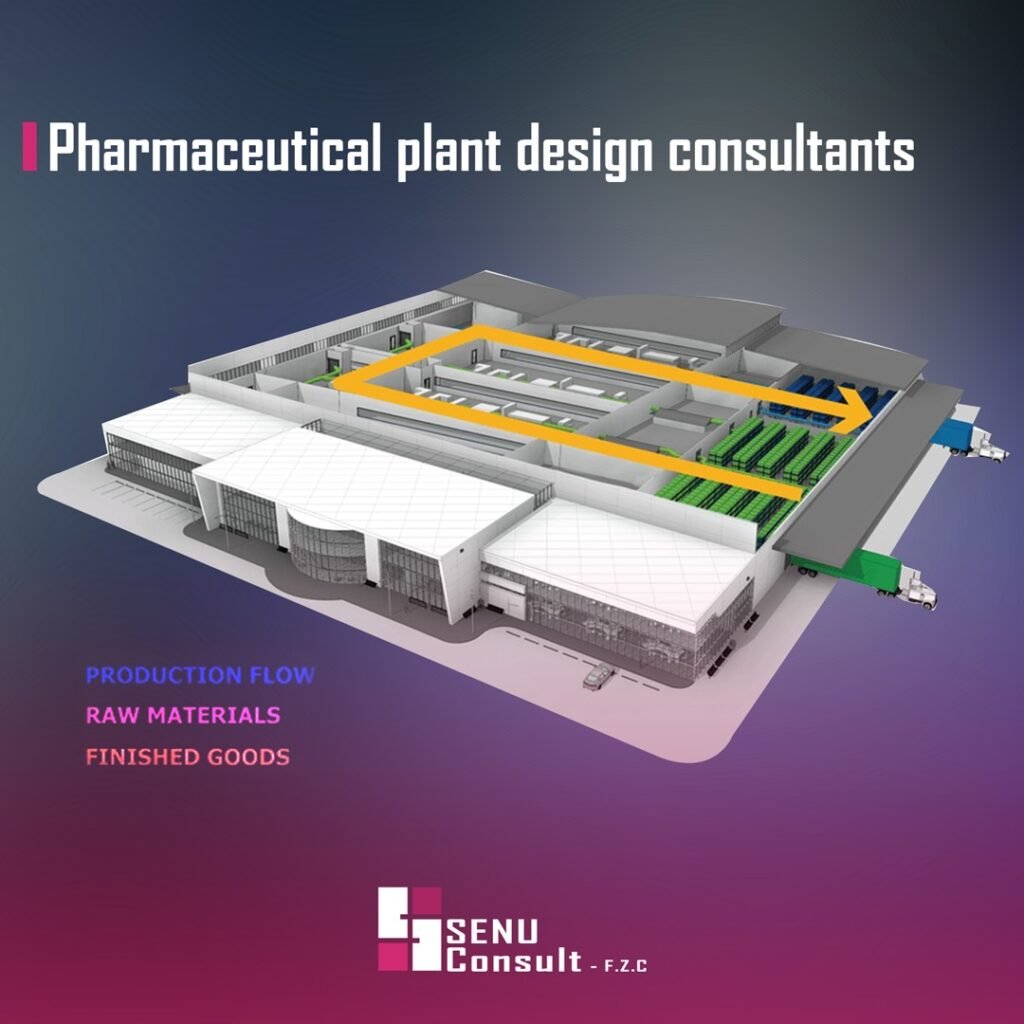
Pharmaceutical plant design consultants
Why Pharmaceutical Plant Design Consultants Are Critical to GMP Success
Pharmaceutical plant design consultants
Introduction
Good Manufacturing Practice (GMP) compliance does not start at production. Instead, it starts much earlier. In pharmaceutical manufacturing, early facility and plant design decisions directly affect regulatory approval, operational efficiency, and long-term compliance.
For this reason, pharmaceutical plant design consultants play a critical role. They help manufacturers integrate GMP requirements into the facility design from the beginning. As a result, companies avoid treating compliance as a corrective action after construction.
GMP Compliance Starts with Design – Pharmaceutical plant design consultants
Regulatory authorities clearly state that quality must be built into pharmaceutical facilities. They do not expect manufacturers to test quality only in finished products.
Poor facility layouts, weak material and personnel flows, and non-compliant utility designs often cause GMP inspection findings. However, pharmaceutical plant design consultants address these risks early. They translate GMP principles into practical design solutions. Moreover, they align segregation concepts, contamination control strategies, and workflows with regulatory expectations. Consequently, manufacturers reduce redesign efforts and inspection delays.
Aligning Facility Design with Regulatory Expectations
One major value of pharmaceutical plant design consultants lies in regulatory interpretation. They understand GMP guidelines and apply them to real facility constraints.
For example, they align cleanroom classifications, HVAC zoning, pressure cascades, and material transfer systems with applicable GMP standards. In addition, they integrate regulatory thinking into engineering design. This approach helps manufacturers demonstrate control, consistency, and traceability during inspections.
Reducing Project Risk and Cost Overruns
Design decisions made without GMP expertise often lead to problems later. During construction or qualification, teams may discover compliance gaps. As a result, projects face rework, higher capital costs, and delayed market entry.
By contrast, engaging experienced pharmaceutical plant design consultants reduces these risks. They identify compliance gaps early and propose suitable design solutions. Therefore, qualification, validation, and routine operations run more smoothly. This proactive approach protects both timelines and investment value.
Supporting Qualification and Operational Readiness
Well-designed pharmaceutical facilities are easier to qualify and operate. They also remain easier to maintain over time.
During the design phase, consultants consider equipment access, maintenance needs, and documentation requirements. Consequently, commissioning and qualification activities progress faster. In turn, this readiness supports successful regulatory inspections and sustainable GMP compliance.
Conclusion
Pharmaceutical plant design consultants are more than technical designers. In fact, they act as strategic partners in GMP success. By embedding compliance into facility design, they help manufacturers reduce risk, accelerate regulatory approval, and build a strong foundation for long-term pharmaceutical manufacturing excellence.
Call to Action
Speak to our pharmaceutical plant design experts to ensure GMP compliance is built into your facility from day one.