
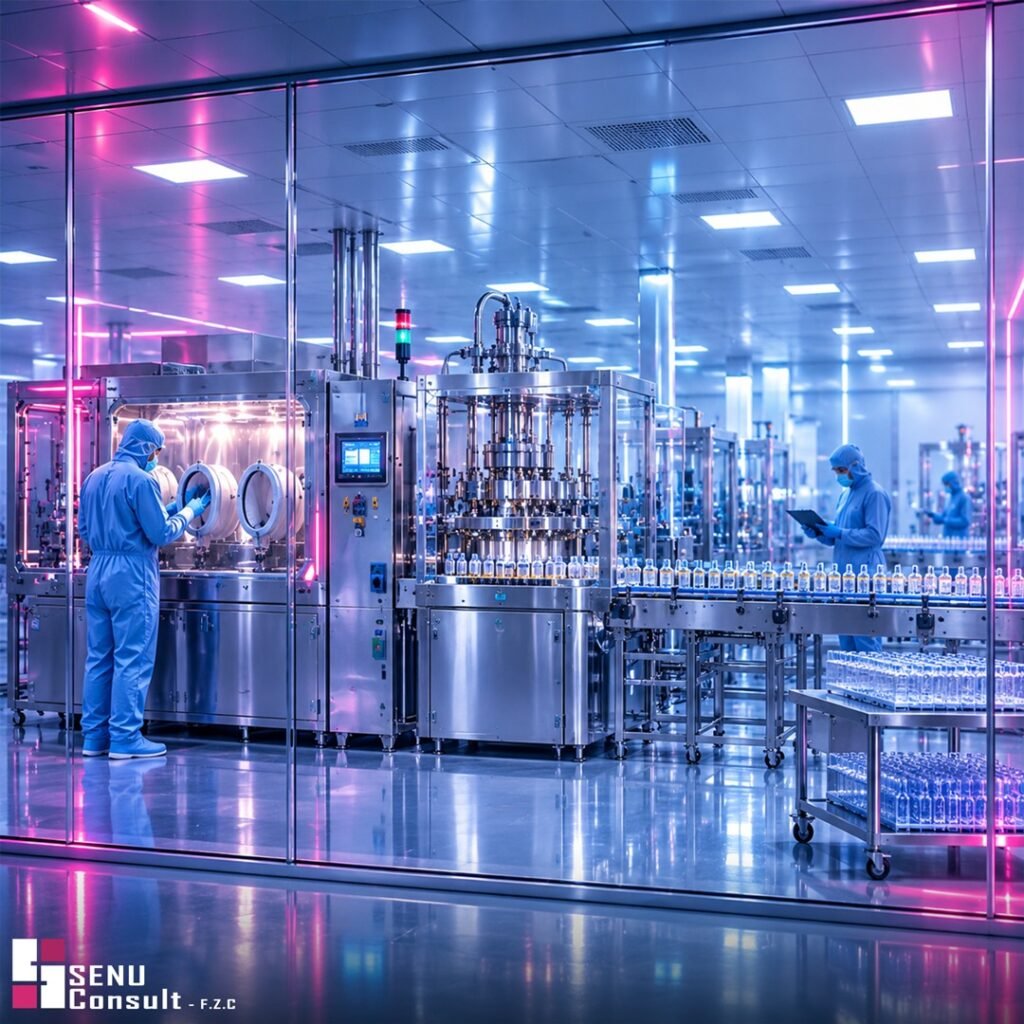
Annex 1 requirements for sterile manufacturing
Annex 1 Requirements for Sterile Manufacturing: A Practical Guide to Compliance and Safe Operation
Annex 1 requirements for sterile manufacturing are among the most important compliance expectations for pharmaceutical companies that manufacture sterile products or plan to enter sterile production. Sterile manufacturing does not depend only on cleanrooms, sterilization equipment, or advanced HVAC systems. Instead, it requires an integrated contamination control system that connects facility design, people, processes, utilities, documentation, qualification, validation, monitoring, and quality culture.
With the updated EU GMP Annex 1, regulatory expectations have become more focused on risk-based thinking, Contamination Control Strategy, facility design, process control, environmental monitoring, qualification, validation, and continuous improvement. The European Commission lists Annex 1 for the manufacture of sterile medicinal products as fully applicable, and WHO also published revised GMP guidance for sterile pharmaceutical products in TRS 1044 Annex 2, developed in collaboration with the European Union and PIC/S to support harmonized expectations.
Therefore, Annex 1 should not be treated as a checklist reviewed shortly before inspection. It should shape the way a sterile facility is designed, built, qualified, operated, monitored, and improved. If Annex 1 expectations are not embedded early, serious gaps may appear later in cleanrooms, personnel and material flows, aseptic processing, sterilization, environmental monitoring, documentation, training, and inspection readiness.
In this guide, we explain the key Annex 1 requirements for sterile manufacturing and how pharmaceutical facilities in Saudi Arabia, the UAE, and the wider Middle East can prepare in a practical way. We also explain how Senu Consult supports regulated facilities from design to compliant operation.
Learn more about Senu Consult here:
What Is Annex 1 and Why Does It Matter?
Annex 1 is part of the EU GMP framework and focuses on the manufacture of sterile medicinal products. It provides guidance on how manufacturers should reduce and control microbiological, particulate, and pyrogen contamination risks in sterile products.
Its importance comes from the nature of sterile products. Many sterile products are injected, infused, applied to the eye, or used in highly sensitive clinical situations. As a result, contamination can create direct patient safety risks. Therefore, sterile products require a higher level of control than many other pharmaceutical products.
Annex 1 also matters because it reflects a modern approach to sterile manufacturing. It does not only ask manufacturers to test the final product. Instead, it expects companies to prevent contamination through strong design, controlled processes, qualified systems, trained people, reliable monitoring, and a mature Pharmaceutical Quality System.
In addition, Annex 1 has become an important reference for companies targeting international standards or export readiness. For many manufacturers, especially those planning to supply regulated markets, aligning sterile manufacturing practices with Annex 1 principles strengthens regulatory confidence and inspection readiness.
For this reason, Annex 1 is not only a concern for the quality department. Engineering, production, microbiology, validation, maintenance, procurement, and leadership teams all need to understand its impact.
Why Annex 1 Is More Important Than Ever
Annex 1 is more important today because regulatory authorities now expect stronger prevention of contamination rather than simple detection after the event. This is especially important in sterile manufacturing because final product testing alone cannot provide full assurance of sterility.
In the past, some facilities approached sterile manufacturing as a set of separate technical requirements. For example, they built cleanrooms, installed HVAC systems, wrote SOPs, performed periodic testing, and prepared documents before inspection. However, this approach is no longer enough.
Today, facilities must prove that they understand their contamination risks and control them through a complete system. This system should include facility design, cleanroom behavior, process design, sterilization strategy, environmental monitoring, aseptic interventions, data review, deviation management, and continuous improvement.
Annex 1 also places strong emphasis on the Contamination Control Strategy. This means that the facility should have a documented and living strategy that explains how contamination risks are identified, controlled, monitored, reviewed, and improved throughout the product and facility lifecycle.
Therefore, sterile manufacturing sites need more than compliance documents. They need practical systems that work during daily operation. They also need evidence that design, people, processes, and monitoring are aligned.
This is why companies planning sterile manufacturing projects should involve GMP, engineering, quality, microbiology, and CQV experts as early as possible.
Contamination Control Strategy: The Core of Modern Annex 1 Compliance
Contamination Control Strategy, often called CCS, is one of the most important requirements in Annex 1. It is not a decorative document prepared only to satisfy inspectors. Instead, it is a practical strategy that explains how the facility controls contamination risks across the full manufacturing lifecycle.
A strong CCS usually covers facility design, room classification, cleanroom flows, personnel movement, material transfer, HVAC systems, cleaning and disinfection, sterilization, environmental monitoring, equipment design, maintenance, aseptic process simulation, training, deviation management, and data review.
However, the real value of CCS is integration. It should connect all contamination control elements into one clear logic. For example, if the facility performs aseptic filling, the CCS should explain how the product is protected during preparation, filtration, transfer, filling, stoppering, capping, and any planned or unplanned intervention.
In addition, CCS should be risk-based. It should not describe systems in general terms only. It should identify the specific risks in the facility and explain the controls used to reduce those risks.
Moreover, CCS should be a living document. If the process changes, equipment is upgraded, cleanroom performance trends shift, monitoring data shows a concern, or inspection findings identify a gap, the CCS should be reviewed and updated.
Senu Consult can support sterile manufacturing facilities by helping teams build practical CCS documents that reflect real operations and connect directly with the Pharmaceutical Quality System.
The Role of the Pharmaceutical Quality System in Annex 1
Annex 1 depends heavily on the Pharmaceutical Quality System. A sterile facility cannot achieve sustained compliance through cleanrooms and equipment alone. It needs a quality system that manages risk, decisions, records, deviations, changes, and continuous improvement.
A strong PQS should include document control, SOP management, personnel training, deviation handling, CAPA, change control, supplier qualification, internal audits, quality risk management, validation governance, and management review.
For sterile manufacturing, the PQS should also support periodic review of the Contamination Control Strategy. This is important because sterile manufacturing risks can change over time due to process changes, equipment performance, personnel behavior, facility aging, monitoring trends, or new regulatory expectations.
Data review is also critical. If environmental monitoring shows an unusual trend, the facility should investigate the cause, assess product impact, and define corrective actions where needed. If interventions increase in a critical area, the facility should review training, process design, equipment setup, or operator behavior.
In other words, Annex 1 expects facilities to use data to understand and improve control. Therefore, quality decisions should not be based on assumptions only. They should be supported by evidence, trend analysis, risk assessment, and documented conclusions.
When the PQS works well, Annex 1 becomes part of daily operation rather than a separate inspection requirement.
Facility Design According to Annex 1 Expectations
Facility design is one of the strongest foundations of sterile manufacturing compliance. If the design is weak, the facility will struggle to control contamination, even if procedures are well written.
A compliant sterile facility should support logical and controlled movement of materials, personnel, equipment, waste, and samples. Clean materials should not cross uncontrolled routes with waste or rejected materials. Personnel should move through appropriate gowning and access steps. Maintenance activities should also be planned in a way that reduces risk to critical areas.
In addition, the design should reflect the required level of environmental control. Critical areas that expose sterile product, sterile containers, closures, or product-contact parts need stronger protection. Less critical areas still need suitable controls, but the design should remain risk-based and practical.
The facility should also be easy to clean and maintain. Surfaces, corners, doors, windows, utilities, drains where applicable, and equipment interfaces should support cleaning and disinfection. If areas are difficult to clean, contamination control becomes harder.
Moreover, environmental monitoring should be considered during design. Sample locations, access points, monitoring routes, and data collection methods should be practical and linked to actual risks.
Senu Consult supports Facility Design & Project Management by helping clients connect Annex 1 expectations with operational reality. The goal is not only to create a facility that looks compliant on drawings, but one that can operate safely and consistently.
Explore Senu Consult services here:
https://senuconsult.com/services/
Cleanrooms and Area Classification in Sterile Manufacturing
Cleanrooms are central to sterile manufacturing. However, cleanroom compliance is not achieved by building controlled rooms alone. The facility must define the purpose, classification, controls, monitoring approach, and operating behavior for each area.
Cleanroom classification should be based on product risk, process type, exposure level, and contamination control needs. The highest control should apply to operations where sterile product, sterile components, or product-contact surfaces are exposed. Supporting areas should be designed to protect the critical process without unnecessary complexity.
WHO’s revised sterile product GMP guidance in TRS 1044 Annex 2 confirms that sterile product manufacture requires special requirements to minimize contamination risks, including microbiological, particulate, and pyrogen contamination.
However, classification labels alone are not enough. Each cleanroom area must have suitable gowning, pressure relationships, cleaning procedures, disinfection practices, material transfer controls, personnel behavior rules, and environmental monitoring.
In addition, the design should reduce human intervention as much as possible. Human activity remains one of the most significant contamination risks in sterile manufacturing. Therefore, facilities should review how operators interact with critical areas and consider engineering controls where appropriate.
Cleanrooms should also be qualified and monitored continuously. Initial qualification proves that the area can achieve the intended performance. Ongoing monitoring confirms whether control is maintained during operation.
HVAC, Differential Pressure, and Environmental Control
HVAC systems play a critical role in meeting Annex 1 requirements for sterile manufacturing. They do much more than provide air conditioning. They help control air quality, air movement, filtration, room pressure, temperature, humidity, and recovery after interventions.
For sterile manufacturing, HVAC design should be based on process needs and contamination control risks. Some areas may require positive pressure to protect the product from surrounding areas. Other areas may need different pressure strategies to protect people, the environment, or adjacent zones.
Differential pressure is especially important because it helps control the direction of airflow between areas. If pressure relationships are unstable, air may move from a less clean area into a more controlled area. This can increase contamination risk and create inspection concerns.
Temperature and humidity also matter. Some products and processes are sensitive to moisture or heat. In addition, operator comfort can influence cleanroom behavior. Therefore, environmental control should support both process requirements and reliable operation.
HVAC systems must also be qualified and monitored. Qualification should demonstrate that the system meets approved design and performance requirements. Ongoing monitoring should confirm that critical parameters remain within expected limits.
Because HVAC affects both engineering performance and product quality, it should not be designed as a separate technical system. Quality, engineering, production, microbiology, and validation teams should work together during design and review.
Contamination Control During Aseptic Processing
Aseptic processing is one of the most sensitive areas in sterile manufacturing. During aseptic operations, sterile product, sterile components, or product-contact surfaces may be exposed to the environment. Therefore, contamination control must be extremely strong.
The first goal is to reduce product exposure. The more time a sterile product is exposed, the higher the potential contamination risk. Therefore, process design should minimize open handling, unnecessary transfers, and avoidable interventions.
The second goal is to control operator interventions. Personnel are a major source of contamination risk in aseptic processing. Operators must be trained in cleanroom behavior, slow and deliberate movement, avoiding airflow obstruction, proper tool handling, and minimizing contact with critical areas.
The third goal is to monitor the process intelligently. Environmental monitoring should focus on meaningful risk points. Sample locations and monitoring timing should be justified by process understanding and contamination risk.
Unplanned interventions should also be managed carefully. If an intervention occurs in a critical area, the facility must assess its impact, document the event, and decide whether further action is needed.
Therefore, aseptic processing success depends on the integration of facility design, barrier systems where applicable, equipment setup, operator behavior, procedures, monitoring, and quality oversight.
Sterilization Strategy and Sterility Assurance
Sterilization is a core element of sterile manufacturing. However, it should not be viewed as a single final step. Instead, sterilization should be part of a wider sterility assurance strategy that covers materials, components, equipment, containers, closures, product-contact parts, and process conditions.
Different sterilization methods may be used depending on product and material characteristics. These may include moist heat, dry heat, sterile filtration, gas sterilization, radiation, or other validated methods where appropriate.
The selected method must be justified, qualified, and validated. For example, autoclave cycles must demonstrate that the required sterilization conditions are achieved throughout the load. Sterile filtration must use suitable filters and appropriate controls. Depyrogenation processes must be validated where relevant.
In addition, post-sterilization handling is critical. A component may be sterile immediately after sterilization, but contamination can occur later during transfer, storage, assembly, or use. Therefore, sterilization strategy must connect with facility flow, aseptic handling, packaging integrity, and environmental control.
Sterilization records must also be complete and reliable. They should show that each cycle or process met approved acceptance criteria. If deviations occur, the impact on sterility assurance must be assessed.
A strong sterilization strategy supports the CCS and gives the facility stronger evidence during inspection.
Cleaning, Disinfection, and Contamination Prevention
Cleaning and disinfection are essential in sterile manufacturing. A cleanroom does not remain controlled automatically. It requires structured cleaning programs, suitable disinfectants, trained personnel, clear procedures, and reliable documentation.
A good cleaning and disinfection program should define what will be cleaned, how it will be cleaned, what agents will be used, how often cleaning will occur, who is responsible, and how cleaning will be recorded.
Disinfectant selection should be justified. Facilities should consider spectrum of activity, compatibility with surfaces, residue risk, rotation strategy, contact time, and operator safety. In some cases, sporicidal agents may be required according to the contamination risk profile.
Training is also critical. If operators use the wrong wiping technique, incorrect contact time, or poor cleaning sequence, the program may fail even when the disinfectant is suitable.
Environmental monitoring data should be reviewed to confirm whether the cleaning and disinfection program is effective. If trends show recurring contamination, the facility should review cleaning methods, frequency, agents, operator behavior, or facility design.
Importantly, cleaning success starts with design. If rooms, surfaces, equipment, or interfaces are difficult to clean, contamination control becomes harder. Therefore, cleaning should be considered during facility and equipment design.
Environmental Monitoring in Sterile Manufacturing
Environmental monitoring is not only a sampling activity. It is a system that helps the facility understand whether its controlled environment remains suitable during routine operation.
A strong environmental monitoring program should be risk-based. It should consider cleanroom classification, process risk, product exposure, airflow patterns, intervention points, personnel activities, and qualification data.
The program may include monitoring of viable particles, non-viable particles, surfaces, air, personnel, and utilities where relevant. However, the exact design depends on the facility, product, and process.
Monitoring locations should be meaningful. Critical locations should relate to areas where product, sterile components, or product-contact surfaces are exposed. Supporting areas should also be monitored in a way that helps detect loss of control.
Alert and action limits should be justified. More importantly, results should be trended over time. A single result can matter, but trends often reveal deeper issues. For example, repeated low-level increases may indicate cleaning weakness, HVAC instability, poor operator behavior, or process changes.
The facility should also define clear responses to results. When a limit is exceeded, the team must investigate, assess impact, document conclusions, and implement corrective actions where needed.
During inspection, teams should be able to explain the logic behind their monitoring program, not only present numbers.
Media Fill and Aseptic Process Simulation
Media fill, also known as Aseptic Process Simulation, is used to demonstrate that the aseptic process can be performed without introducing contamination. It is one of the most important tools for evaluating aseptic process control.
A good media fill program should reflect the actual manufacturing process as closely as possible. It should include routine interventions, expected operational conditions, personnel involvement, line setup, process duration, and relevant worst-case scenarios where justified.
The purpose is not only to pass a test. The purpose is to challenge the process and show that the facility, equipment, procedures, and people can protect the product during aseptic operation.
If a media fill fails or produces an unacceptable result, the facility must conduct a thorough investigation. The investigation should identify the cause, assess impact, define corrective actions, and determine whether repeat simulation is required.
Media fill results should also be reviewed with environmental monitoring data, intervention records, deviations, and training records. This integrated review provides a stronger understanding of process control.
Therefore, media fill is not an isolated periodic exercise. It is an important part of the facility’s sterility assurance program and contamination control strategy.
Qualification of Equipment, Utilities, and Facilities
Qualification is essential for proving that facilities, utilities, and equipment are suitable for sterile manufacturing. Without proper qualification, the facility cannot provide strong evidence that critical systems perform as intended.
Systems that may require qualification include cleanrooms, HVAC systems, water systems, compressed air, sterilizers, filling lines, lyophilizers, isolators, RABS, monitoring systems, and other critical equipment depending on product and process impact.
Qualification should begin with clear requirements. User Requirement Specifications should define what the system must do. Design reviews should confirm that the proposed solution can meet those requirements. Then installation, operational, and performance qualification activities should provide documented evidence.
The level of qualification should be risk-based. Systems with direct impact on sterile product quality require more robust qualification and stronger documentation.
Documents should also be easy to review. Inspectors often examine whether requirements, tests, acceptance criteria, deviations, and conclusions are logically connected.
Senu Consult supports Commissioning, Qualification, and Validation services to help clients build practical CQV strategies aligned with sterile manufacturing expectations.
Documentation, Data Integrity, and Record Control
Documentation is critical in sterile manufacturing because compliance must be demonstrated through reliable evidence. Records should be accurate, complete, clear, timely, traceable, and available for review.
Important documents may include SOPs, batch records, cleaning records, sterilization records, environmental monitoring results, qualification reports, validation reports, training records, deviation investigations, CAPA records, change controls, maintenance records, and quality reviews.
Data integrity is also essential. The issue is not only whether records exist, but whether the organization can trust them. Therefore, access control, audit trails, review processes, electronic records, manual entries, corrections, approvals, and backup practices must be controlled.
Procedures should also match actual practice. If the written procedure does not reflect what operators do in the facility, this creates a clear inspection risk. Therefore, procedures should be reviewed regularly and updated when processes change.
Good documentation does not mean unnecessary paperwork. It means having a controlled system that proves what happened, who did it, when it happened, why decisions were made, and whether the process remained under control.
This is especially important in sterile manufacturing, where the ability to reconstruct and evaluate events can directly support patient safety decisions.
Personnel Training and Quality Culture
People are one of the most important factors in sterile manufacturing. Even with excellent cleanroom design and qualified equipment, poor behavior can increase contamination risk.
Training should cover GMP principles, microbiology basics, cleanroom behavior, gowning, aseptic interventions, cleaning, documentation, deviation reporting, contamination control, and the facility’s CCS.
However, training should not be theoretical only. Operators working in cleanrooms need practical training and observation. They must understand how movement, posture, hand position, intervention technique, and airflow obstruction can affect contamination risk.
Training effectiveness should also be evaluated. Attendance alone is not enough. The facility should confirm that employees understand and can apply the required practices.
Quality culture is equally important. Employees should feel responsible for patient safety and product quality. They should report problems, deviations, and risks without fear. When quality culture is strong, the organization can identify issues earlier and improve faster.
Therefore, training and culture are not supporting activities. They are central to Annex 1 compliance and sterile manufacturing success.
Inspection Readiness Under Annex 1
Inspection readiness under Annex 1 should begin long before inspectors arrive. A sterile facility must be ready to show how it controls contamination risk through design, systems, people, procedures, and data.
The CCS should be clear, current, and understood by relevant teams. Environmental monitoring data should be trended and reviewed. Deviations and CAPA should show effective investigation and follow-up. Cleaning and disinfection programs should be justified and supported by data.
In addition, qualification files, sterilization records, media fill results, training records, intervention logs, maintenance records, change controls, and batch records should be complete and consistent.
A gap assessment can help identify weaknesses before inspection. The assessment should compare current practice with Annex 1 expectations and prioritize actions according to risk.
Inspection readiness should not be a last-minute project. It should be part of daily operations. When the facility operates in a state of control, inspection preparation becomes easier and less stressful.
Senu Consult supports Regulatory Audit Preparation and QMS Optimization to help facilities improve inspection readiness and long-term compliance performance.
To contact Senu Consult, visit:
https://senuconsult.com/contact-us/
How Senu Consult Supports Annex 1 Compliance
Senu Consult supports pharmaceutical companies and regulated facilities in understanding and applying Annex 1 requirements for sterile manufacturing in a practical way. We do not treat Annex 1 as a checklist only. Instead, we help clients turn its expectations into design, operational, quality, and CQV decisions.
Our support may include GMP design review, Contamination Control Strategy development, material and personnel flow optimization, cleanroom and HVAC planning support, QMS improvement, CQV planning, inspection preparation, and technical compliance training.
We also help clients reduce the gap between design and operations. This is especially important in sterile manufacturing because design weaknesses can become long-term contamination control risks.
Senu Consult serves life sciences, food, and other regulated industries across the MENA region. Our approach helps clients transform complex regulatory and engineering requirements into practical project steps.
Explore the industries we serve here:
https://senuconsult.com/industries-we-serve/
Common Mistakes in Annex 1 Implementation
Several mistakes can weaken Annex 1 implementation.
The first mistake is treating Annex 1 as a quality department document only. In reality, Annex 1 affects engineering, operations, microbiology, validation, training, maintenance, and management.
The second mistake is creating a generic CCS that does not reflect the actual facility. A useful CCS must connect with real processes, risks, controls, data, and decisions.
The third mistake is designing cleanrooms without fully understanding material and personnel flows. This can create contamination risks that are difficult to correct later.
The fourth mistake is delaying CQV planning until the end of the project. Late planning can reveal missing requirements, unclear acceptance criteria, or design gaps.
The fifth mistake is weak personnel training, especially in aseptic behavior and interventions.
Another common mistake is collecting environmental monitoring data without meaningful trend analysis. Data should drive improvement, not simply fill files.
Finally, some facilities fail to connect changes, deviations, and monitoring trends back to the CCS. This weakens the facility’s ability to demonstrate control.
Avoiding these mistakes requires an integrated approach that starts at design and continues throughout routine operation.
Annex 1 Is More Than Compliance: It Protects Patients and Quality
Annex 1 does not exist to add complexity for its own sake. Its purpose is to protect patients by reducing contamination risks in sterile products.
When Annex 1 is applied correctly, facilities gain several benefits. They improve inspection readiness, reduce contamination risks, strengthen process understanding, improve quality culture, support export readiness, and reduce the cost of deviations and rework.
However, successful implementation requires multidisciplinary expertise. Engineering, quality, microbiology, operations, sterilization, validation, and leadership teams must work together.
This is why an experienced partner can make a major difference. The right partner helps translate regulatory expectations into practical systems, facility decisions, training programs, and operating controls.
Start Your Annex 1 Readiness Assessment
If you are planning a sterile manufacturing facility, upgrading an existing site, or preparing for regulatory inspection, an Annex 1 readiness assessment is a valuable first step. It helps identify gaps, prioritize actions, reduce risk, and prepare the facility before issues become inspection findings or start-up delays.
With Senu Consult, you can build a clear path to Annex 1 compliance from design and CCS development to cleanroom planning, HVAC review, CQV, operational readiness, and inspection preparation.
Contact Senu Consult
Website: https://senuconsult.com/
Email: info@senuconsult.com
Phone: +971566360153
Request a Consultation
https://senuconsult.com/contact-us/