
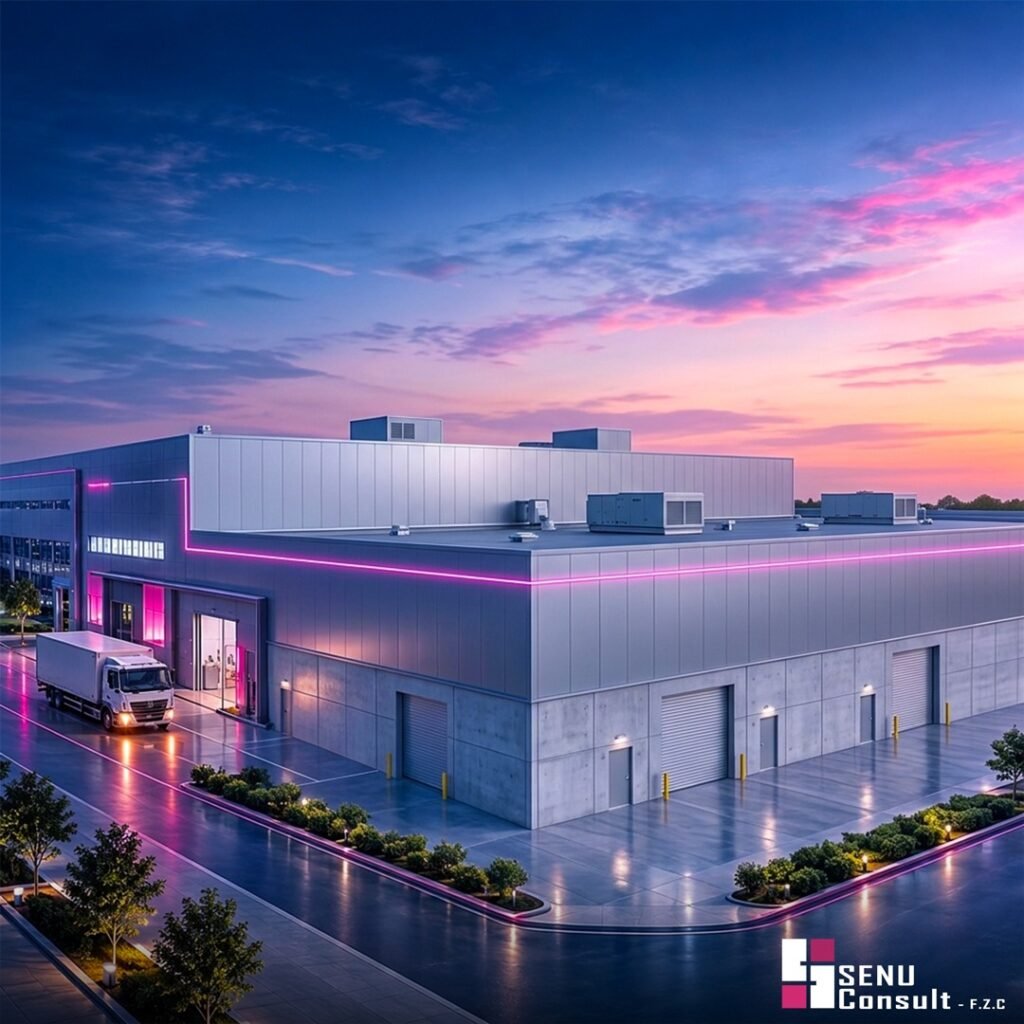
build a pharmaceutical factory that meets international standards
How to Build a Pharmaceutical Factory That Meets International Standards
To build a pharmaceutical factory that meets international standards, investors and pharmaceutical companies need more than a building, production lines, and modern equipment. A successful pharmaceutical manufacturing facility must combine engineering design, GMP compliance, quality systems, cleanroom planning, HVAC performance, documentation, qualification, validation, and regulatory readiness in one integrated project.
Today, pharmaceutical manufacturing is growing across Saudi Arabia, the UAE, and the wider Middle East. However, growth also brings higher expectations. Investors want facilities that can support local production, pass regulatory inspections, improve export readiness, and operate efficiently from day one. Therefore, the right approach must start before construction begins.
A pharmaceutical factory should not be designed only around space, budget, or equipment lists. Instead, it should be designed around products, processes, risks, compliance expectations, operational flows, and future expansion. When these elements are clear from the beginning, the project becomes easier to manage, easier to qualify, and easier to operate.
At Senu Consult, we help regulated industries bridge vision and execution. Our team supports pharmaceutical and life sciences projects from concept to GMP-compliant start-up, helping clients bring facilities online faster, safer, and fully compliant.
Learn more about Senu Consult here:
Why Pharmaceutical Factory Projects Require a Different Approach
Building a pharmaceutical factory is different from building a standard industrial facility. The reason is simple: pharmaceutical products affect patient safety directly. As a result, every area, system, process, and document must support product quality and regulatory compliance.
A factory cannot only be capable of producing medicines. It must also prove that every batch is manufactured under controlled, documented, and repeatable conditions. Therefore, regulators do not only review the finished product. They also review the facility, the process, the equipment, the people, the records, and the quality system behind that product.
If the project starts without a specialized plan, problems may appear later. For example, the layout may create poor personnel or material flow. Cleanroom areas may not support the required classification. HVAC systems may fail to maintain pressure, temperature, humidity, or air quality. Equipment may be difficult to clean, qualify, or validate. In addition, the quality system may not be ready when the facility is physically complete.
Consequently, the project may face delays, rework, higher costs, and inspection risks. For this reason, pharmaceutical facilities need early integration between engineering, quality, operations, regulatory expectations, and CQV.
Senu Consult approaches each pharmaceutical project as an operational and regulatory system, not only as a construction project. This helps clients design facilities that are practical, compliant, and ready for long-term performance.
Step 1: Define the Project Vision and Target Products
The first step in building a pharmaceutical factory that meets international standards is defining the project vision. Although this step may seem simple, it affects almost every decision that follows.
The project team must identify the type of products the facility will manufacture. Will the factory produce solid dosage forms such as tablets and capsules? Will it manufacture liquids, creams, sterile products, vaccines, or specialized products? Will it serve only the local market, or will it support export to other markets later?
Each answer affects facility design, cleanroom requirements, equipment selection, utilities, documentation, validation strategy, cost, and timeline.
For example, sterile manufacturing requires different controls compared with non-sterile production. Products that are sensitive to humidity may require stricter HVAC and environmental control. Multi-product facilities may need stronger segregation strategies to reduce cross-contamination risk.
Production capacity is also important. If the facility is oversized, the investor may carry unnecessary capital and operating costs. However, if it is undersized, the factory may struggle to grow. Therefore, the project should balance current demand with future expansion.
At this stage, Senu Consult helps clients convert a general business idea into clear operational and technical requirements. This creates a strong foundation for design, budgeting, procurement, compliance planning, and execution.
Step 2: Understand GMP and Regulatory Requirements
After defining the project vision, the next step is to understand the applicable GMP and regulatory requirements. This stage sets the compliance framework for the entire facility.
GMP requirements cover many areas. They include contamination control, facility layout, material and personnel flow, equipment suitability, cleaning, documentation, training, deviation management, change control, CAPA, qualification, validation, and quality oversight.
However, the goal is not only to list the requirements. The real value comes from translating them into practical project decisions. For example, if the product requires a controlled environment, this must influence cleanroom classification, HVAC design, gowning areas, material transfer routes, cleaning procedures, and environmental monitoring.
If the facility will manufacture multiple products, the project must evaluate risks related to mix-ups, cross-contamination, cleaning validation, storage segregation, and campaign planning. If the company wants export readiness, the facility may need to consider broader international expectations from the beginning.
In addition, the Quality Management System should be developed in parallel with the facility. SOPs, document control, training plans, deviation systems, supplier qualification, and validation documentation should not wait until the end of construction.
By embedding GMP early, companies reduce redesign risk and improve inspection readiness. This approach also helps the project move from construction to operation with fewer gaps.
Step 3: Develop the Conceptual Facility Design
Conceptual design is the stage where the factory idea becomes an initial engineering and operational model. During this phase, the project defines the facility zones, production areas, warehouses, laboratories, utilities, cleanrooms, personnel routes, and material flows.
However, a strong conceptual design is not only about creating an attractive layout. It must answer practical questions. How will raw materials enter the facility? Where will they be quarantined, sampled, released, stored, weighed, and transferred? How will products move from manufacturing to packaging and finished goods storage? How will rejected materials, waste, and maintenance activities be controlled?
The design must follow the logic of manufacturing operations. Therefore, it should reduce unnecessary movement, prevent uncontrolled intersections, and support clean and efficient workflows.
Critical areas must also be identified early. These may include dispensing rooms, production rooms, sterile areas, sampling rooms, laboratories, clean corridors, airlocks, washing areas, and technical spaces. Each area must reflect the required level of control.
Future expansion should also be considered. A factory that is designed only for current production may become difficult to expand later. Therefore, a good conceptual design should support growth without creating major compliance risks.
Senu Consult provides Facility Design & Project Management services to help clients create practical, GMP-aligned facility concepts. You can explore our services here:
https://senuconsult.com/services/
Step 4: Design Personnel and Material Flows Correctly
Personnel and material flow is one of the most important parts of pharmaceutical facility design. Poor flow design can increase contamination risk, slow down operations, and create inspection findings. Therefore, flow planning must be clear from the beginning.
Material flow usually starts at receiving. Then, materials move to quarantine, sampling, release, storage, dispensing, manufacturing, packaging, and finished goods storage. At each stage, the design must define the required controls, documentation points, separation needs, and handling conditions.
At the same time, personnel flow must support area classification and GMP behavior. Operators should not move from lower-control areas to higher-control areas without appropriate gowning and entry procedures. Therefore, gowning rooms, airlocks, controlled access points, and entry/exit routes are essential.
Waste flow is also important. Rejected materials, used consumables, and waste should not cross clean material routes or finished product flows. Maintenance routes should also be planned carefully to reduce disruption to production areas.
When flows are designed correctly, daily operations become easier. Teams can follow procedures more consistently, and quality risks decrease. In addition, inspectors can understand the logic of the facility more clearly.
For this reason, flow design is not just an architectural detail. It is a core GMP requirement that affects product quality, operational efficiency, and regulatory confidence.
Step 5: Plan Cleanrooms and HVAC Systems
Cleanrooms and HVAC systems are critical to pharmaceutical compliance. They are especially important in facilities that manufacture sterile, sensitive, or contamination-prone products.
A cleanroom is not simply a clean-looking room. It is a controlled environment designed to manage airborne particles, contamination risks, pressure relationships, temperature, humidity, cleaning behavior, and personnel activity. Therefore, each cleanroom must be classified according to the process and product risk.
HVAC systems support cleanroom performance. They control air supply, air return, filtration, pressure differentials, temperature, humidity, and air change rates. As a result, HVAC design must reflect the actual manufacturing process, not generic assumptions.
For example, some areas require positive pressure to protect the product. Other areas may require negative pressure to protect personnel or the surrounding environment. Some processes require strict humidity control. Others require careful air movement to reduce contamination risk.
Finishing materials also matter. Cleanroom surfaces should be easy to clean, resistant, smooth, durable, and suitable for GMP environments. The layout should also support cleaning, maintenance, monitoring, and routine operation.
If cleanrooms or HVAC systems are poorly designed, problems may appear during qualification or inspection. Pressure instability, poor airflow, unsuitable finishes, or weak monitoring strategies can delay start-up and increase regulatory risk.
Therefore, cleanroom and HVAC planning should involve engineering, quality, operations, and compliance experts from the earliest stages.
Step 6: Select Equipment and Systems with Qualification in Mind
Equipment selection should not depend only on cost, availability, or brand reputation. Instead, each equipment decision should consider process suitability, cleaning, maintenance, data requirements, GMP compliance, qualification, and validation.
This is why Equipment & Systems Procurement is a strategic step in pharmaceutical factory development.
Some equipment may look attractive commercially but create problems later. For example, it may be difficult to clean, difficult to maintain, hard to qualify, or unable to provide the documentation required for GMP evidence. In other cases, equipment may not integrate well with utilities, room layouts, data systems, or process flows.
To avoid these issues, the project should define User Requirement Specifications before procurement. URS documents describe what the equipment must do, how it should perform, what standards it should meet, and how it will be evaluated.
Supplier evaluation is also essential. A reliable supplier should provide technical documentation, factory acceptance testing support, installation guidance, certificates, calibration information, and after-sales support where needed.
In addition, equipment must fit the full production system. It must align with available space, utilities, cleaning strategy, operator access, maintenance needs, and qualification planning.
With structured procurement support, companies can reduce the risk of unsuitable purchases and improve readiness for CQV and operational start-up.
Step 7: Build the Quality Management System Early
A pharmaceutical factory cannot meet international standards without a strong Quality Management System. The building and equipment are only part of the project. The QMS is what controls daily operations and proves compliance.
A strong QMS covers document control, SOPs, training, deviation management, CAPA, change control, supplier qualification, internal audits, complaints, validation governance, and management oversight.
The QMS should be built during the project, not after construction is complete. If the quality system is delayed, the facility may look ready but remain unable to operate under GMP expectations.
First, the company must define the documentation structure. This includes policies, procedures, forms, records, protocols, reports, and quality manuals where applicable. Then, employees must be trained on the procedures that apply to their roles.
Change control is also essential. Any change in design, equipment, utilities, processes, or documentation may affect compliance. Therefore, changes must be assessed, approved, implemented, and documented.
Deviation and CAPA systems must also be in place. These systems help the organization investigate problems, identify root causes, correct issues, and prevent recurrence.
Most importantly, the QMS should create a culture of quality. GMP compliance is not the responsibility of the quality department alone. It depends on production, engineering, warehousing, laboratories, management, and every person involved in the process.
Senu Consult supports QMS Optimization and Supplier Audit Frameworks to help companies build practical and inspection-ready quality systems.
Step 8: Plan Commissioning, Qualification, and Validation
Commissioning, Qualification, and Validation, commonly known as CQV, create the bridge between construction and compliant operation. A facility must not only be built. It must also prove that its systems, utilities, equipment, and processes work as intended.
CQV should be planned during design. If it starts only after installation, the project may discover missing documents, unclear requirements, or design decisions that are difficult to verify.
Commissioning confirms that systems and equipment are installed and operate according to technical expectations. Qualification provides documented evidence that critical systems meet approved requirements. Validation confirms that processes consistently deliver the intended results.
For example, HVAC systems may require qualification to prove pressure, temperature, humidity, airflow, and air quality performance. Water systems may require qualification to prove consistent water quality. Production equipment may require installation qualification, operational qualification, and performance qualification.
Process validation may also be required to show that the manufacturing process can consistently produce a product that meets specifications.
A strong CQV strategy reduces start-up risk. It also improves inspection readiness because the facility can present clear evidence of control.
Senu Consult provides Commissioning, Qualification & Validation support as part of its integrated facility development services, helping clients move from project execution to compliant operation more efficiently.
Step 9: Prepare and Train the Operational Team
Even the best facility design and the strongest QMS will not succeed without trained people. Pharmaceutical manufacturing depends heavily on operator behavior, documentation discipline, cleaning practices, engineering support, and quality oversight.
Therefore, team preparation should begin before the facility starts operation. Employees must understand GMP principles, product risks, facility flows, hygiene requirements, documentation expectations, and their own responsibilities.
Production teams need training on batch records, cleaning, material handling, room entry, equipment use, and deviation reporting. Quality teams need training on review, release, investigations, audits, change control, CAPA, and documentation. Engineering teams need to understand maintenance requirements in GMP environments.
Training must also be documented. In regulated industries, undocumented training is not enough. Records should show who was trained, what they were trained on, when training happened, and whether the training was effective.
Inspection readiness training is also useful. The goal is not to memorize answers. Instead, teams should understand the system clearly and explain their work confidently.
When people are prepared early, the factory becomes more stable during start-up. Mistakes decrease, procedures become easier to follow, and compliance culture becomes stronger.
Step 10: Prepare for Regulatory Inspection and Approval
Regulatory inspection is a major milestone in pharmaceutical facility development. It tests whether the facility, systems, people, procedures, records, and controls are ready for compliant operation.
Before inspection, the company should conduct a full internal readiness review. This review may identify missing SOPs, incomplete training records, gaps in qualification documentation, weak deviation handling, unclear responsibilities, or differences between procedures and actual practice.
After identifying gaps, the team should create and implement a clear corrective plan. This helps reduce inspection risk and improves the maturity of the quality system.
Important files should also be reviewed. These may include equipment files, calibration records, maintenance records, cleaning records, environmental monitoring data, qualification reports, validation reports, deviation records, CAPA plans, change controls, supplier qualification records, and training records.
In addition, the team must be ready to interact with inspectors. Documents should be easy to access. Roles should be clear. Responses should be accurate and supported by evidence.
Senu Consult supports Regulatory Audit Preparation to help facilities prepare for inspections in a structured and practical way. This makes inspection readiness part of the quality culture, not a last-minute activity.
Common Mistakes When Building a Pharmaceutical Factory
Several common mistakes can affect pharmaceutical factory projects if they are not addressed early.
The first mistake is starting design before defining products and processes clearly. This often leads to repeated design changes and poor operational fit.
The second mistake is treating GMP as a final-stage activity. In reality, GMP must be embedded in every decision from the beginning.
The third mistake is selecting equipment based only on price. Low-cost equipment may create higher costs later if it is difficult to qualify, clean, maintain, or validate.
The fourth mistake is excluding quality and operations teams from design discussions. When design is separated from actual operation, the facility may become difficult to run.
The fifth mistake is delaying QMS development. If SOPs, training, change control, and deviation systems are not ready, the factory cannot start smoothly.
Another mistake is ignoring future expansion. A facility that cannot grow may need expensive redesign later.
Finally, some investors work with too many disconnected suppliers without an integrated project owner. This can create gaps between design, procurement, execution, qualification, and quality.
A strong integrated partner helps reduce these mistakes by managing the facility as one connected system.
How Senu Consult Supports Pharmaceutical Factory Development
Senu Consult supports pharmaceutical factory projects through an integrated approach that connects design, quality, operations, compliance, and execution.
Our services can support concept development, project requirement definition, facility design optimization, project management, equipment and systems procurement, CQV planning, quality system development, regulatory audit preparation, and technical compliance training.
We focus on reducing the gap between design and operations. This gap is one of the major causes of delays in regulated facility projects. Therefore, our approach helps clients build facilities that are Born Operational from Day One.
Senu Consult serves life sciences, food, and other regulated industries across the MENA region. Through practical technical experience, our team helps clients convert complex regulatory and engineering requirements into clear, actionable project steps.
You can explore the industries we serve here:
https://senuconsult.com/industries-we-serve/
Why an Integrated Partner Is Better Than Disconnected Suppliers
Some pharmaceutical projects depend on separate providers for design, equipment, construction, qualification, quality systems, and regulatory consulting. Although this may appear flexible, it can create confusion and accountability gaps.
When each party works separately, engineering drawings may not match operational needs. Equipment may not fit the layout or qualification strategy. CQV may begin without enough documentation. The QMS may not reflect actual site operations.
An integrated partner reduces these risks. It connects decisions, aligns teams, and keeps the project focused on the final goal: a compliant and operational-ready pharmaceutical facility.
This is the value of Senu Consult’s integrated model. We support clients from blueprint to breakthrough, helping them move from idea to compliant start-up with fewer handover gaps.
To contact the Senu Consult team, visit:
https://senuconsult.com/contact-us/
Cost of Building a Pharmaceutical Factory That Meets International Standards
The cost of building a pharmaceutical factory varies widely. It depends on product type, production capacity, cleanroom classification, equipment complexity, HVAC requirements, water systems, laboratories, warehouses, automation, utilities, and regulatory expectations.
Therefore, no single number can apply to every project. However, strong planning can control cost more effectively.
When requirements are clear early, the project avoids repeated changes. When equipment is selected according to process and qualification needs, procurement risks decrease. When GMP is embedded in the design, the project reduces expensive corrective work after construction.
On the other hand, reducing cost in critical areas can create larger losses later. For example, weak HVAC design, poor flow planning, or unsuitable finishes may require major rework. Incomplete documentation or a weak QMS may delay start-up and affect return on investment.
Therefore, investors should look at cost across the full facility lifecycle, not only the initial construction budget. A well-designed and compliant facility can cost less over time because it reduces rework, delays, and operational inefficiencies.
With Senu Consult, investors can make more informed decisions and connect budget planning with compliance, design, and operational readiness.
Sustainability and Operational Efficiency in Pharmaceutical Facilities
Sustainability is becoming increasingly important in pharmaceutical facility development. In the Middle East, energy efficiency, water management, environmental responsibility, and operating cost control are all important project drivers.
However, sustainability must not compromise compliance. The real goal is to improve efficiency while maintaining GMP expectations.
For example, HVAC systems can be optimized for energy efficiency, but they must still support cleanroom classification, pressure control, temperature, humidity, and air quality. Equipment can be selected for lower energy use, but it must still meet process and qualification requirements.
Facility design can also reduce waste, improve space utilization, simplify maintenance, and support long-term operational efficiency. In addition, flexible design can extend facility life and reduce the need for major reconstruction during future expansion.
Senu Consult includes Sustainability Integration as part of its service offering, helping clients build facilities that are compliant, efficient, and prepared for the future.
From Concept to Operation: One Connected Journey
To build a pharmaceutical factory that meets international standards, companies must treat the project as one connected journey. Concept, design, procurement, execution, QMS development, CQV, training, and inspection readiness should not work in isolation.
Every early decision should support final operation. Every document should reflect real practice. Every design choice should support quality. Every equipment decision should support qualification. Every team member should understand their role in the GMP system.
When the project follows this approach, the facility becomes more than a completed building. It becomes a controlled manufacturing system that can operate with confidence, pass inspections more effectively, and support future growth.
This is where Senu Consult creates value. We help clients align vision, compliance, engineering, and operational execution to create facilities that are practical, sustainable, and audit-ready.
Start Your Pharmaceutical Factory Project the Right Way
Building a pharmaceutical factory requires more than capital and construction. It requires a clear GMP strategy, operational design, quality systems, CQV planning, trained people, and regulatory readiness.
With Senu Consult, you can reduce project risk, improve inspection readiness, build a practical quality system, and design a facility that supports long-term growth. Whether you are planning a new pharmaceutical manufacturing facility or upgrading an existing site in Saudi Arabia, the UAE, or the wider Middle East, the right partner can make the journey clearer and safer.
Contact Senu Consult
Website: https://senuconsult.com/
Email: info@senuconsult.com
Phone: +971566360153
Request a Consultation
https://senuconsult.com/contact-us/